# MOTS-c 20mg ZPHC: Understanding Its Role in Metabolic Research
Mitochondrial peptides have become an interesting area of modern biological research because of their connection with cellular energy production and metabolic regulation. Among these compounds, MOTS-c has attracted attention for its proposed role in processes involving glucose utilization, energy balance, and mitochondrial function. MOTS-c 20mg ZPHC is presented as a laboratory-grade peptide formulation centered on these areas of research.
**What Is MOTS-c?**
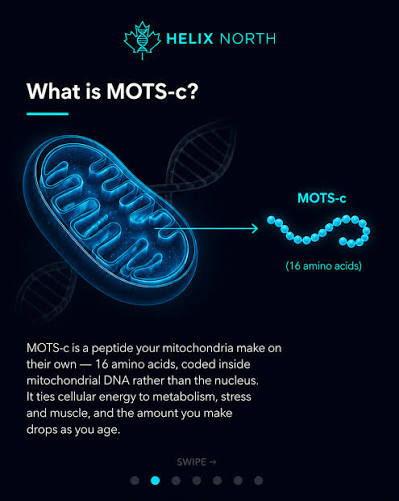
MOTS-c stands for mitochondrial open reading frame of the 12S rRNA. It is a peptide associated with mitochondrial biology and is being studied for its potential influence on cellular metabolism.
According to the product information, the formulation contains 20 mg of lyophilized MOTS-c peptide and is supplied together with bacteriostatic water intended for reconstitution. The product is described as a laboratory-grade peptide rather than an established medical treatment.
**The Importance of Mitochondrial Function**
Mitochondria are essential structures within cells that play a central role in producing adenosine triphosphate, or ATP. ATP provides the energy required for many biological processes, from muscle contraction to cellular maintenance.
Because of this central role, mitochondrial function is closely connected with overall metabolism. Researchers are interested in compounds such as MOTS-c because they may provide additional insight into how mitochondria communicate with other parts of the cell and respond to changing energy demands.
**MOTS-c and Metabolic Efficiency**
One of the main areas associated with MOTS-c is metabolic efficiency. The product description connects the peptide with fat metabolism, glucose regulation, insulin sensitivity, and energy utilization.
Metabolic efficiency is not controlled by one mechanism. It involves interactions between glucose metabolism, fatty-acid utilization, mitochondrial activity, hormones, nutrition, and physical activity. This makes mitochondrial-derived peptides particularly interesting for researchers studying how the body adapts to different metabolic conditions.
**Glucose Regulation and Insulin Sensitivity**
Glucose is one of the body's major energy sources, while insulin plays an important role in helping cells utilize glucose. The relationship between glucose metabolism and insulin sensitivity is therefore an important part of metabolic research.
MOTS-c has been investigated in connection with pathways involved in glucose handling and metabolic regulation. The product information specifically describes the peptide as being associated with glucose control and insulin sensitivity.
These descriptions should be viewed as areas of research interest rather than guaranteed clinical effects.
**Energy Production and ATP**
Another significant aspect of MOTS-c research is its proposed relationship with cellular energy production. Since mitochondria are responsible for much of the body's ATP production, changes in mitochondrial signaling can potentially affect how cells respond to energy demands.
The product description associates MOTS-c with enhanced ATP production and endurance. This helps explain why the peptide has attracted attention in discussions involving physical conditioning and metabolic performance.
**MOTS-c and Physical Conditioning**
Exercise requires substantial amounts of energy, particularly during prolonged or high-intensity activity. Muscles must continuously produce ATP while adapting to changing metabolic demands.
This connection makes mitochondrial peptides an interesting subject for sports and exercise research. MOTS-c is described in the product information as being relevant to energy utilization, endurance, and overall conditioning.
However, physical performance remains dependent on established factors such as training quality, nutrition, sleep, cardiovascular fitness, and recovery.
**Body Composition and Recomposition**
Body composition is another area frequently discussed in relation to MOTS-c. The product description connects the peptide with fat loss, metabolic efficiency, and body recomposition during cutting phases.
From a biological perspective, energy balance and the way the body processes carbohydrates and fats are important components of body composition. Nevertheless, changes in body fat and lean mass involve numerous variables and cannot be attributed to a single peptide or metabolic pathway.
**Why Mitochondrial Peptides Are Interesting**
Traditional approaches to metabolic research often focus on hormones, enzymes, receptors, and nutrient signaling. Mitochondrial-derived peptides introduce another dimension by examining how mitochondria themselves may participate in cellular communication.
MOTS-c is particularly interesting because it connects mitochondrial biology with broader metabolic processes. Researchers are investigating whether this type of signaling could help explain how cells adapt to changes in energy availability and physiological stress.
**Product Composition and Format**
MOTS-c 20mg ZPHC is described as containing one vial with 20 mg of lyophilized MOTS-c peptide and one vial of bacteriostatic water for reconstitution.
The lyophilized format means that the peptide is supplied in a dried form rather than as a ready-to-use liquid. Handling products that require reconstitution involves considerations related to sterility, storage, and preparation.
**Research Versus Established Treatment**
It is important to distinguish experimental peptide research from approved medical treatment. Interest in MOTS-c has grown because of its potential connections with mitochondrial function and metabolism, but research findings do not automatically establish clinical effectiveness or long-term safety in humans.
Claims concerning fat loss, glucose control, endurance, or body recomposition should therefore be interpreted cautiously. Lifestyle factors and medically established approaches remain central to metabolic health.
**A Broader Perspective on MOTS-c**
MOTS-c represents an emerging area of research that brings mitochondrial biology into discussions about metabolism and physical performance. Its proposed relationship with glucose utilization, energy production, fat metabolism, and cellular adaptation provides several potential directions for scientific investigation.
The significance of this peptide ultimately depends on continued research and a better understanding of how mitochondrial signaling operates in humans. Future studies may clarify which of the proposed effects have meaningful clinical applications.
**Conclusion**
[MOTS-C 20mg ZPHC](https://www.ecbt.org/product/mots-c-20mg-usa-domestic-zphc/) is centered on a mitochondrial-derived peptide being investigated for its relationship with cellular metabolism and energy regulation. Its proposed areas of interest include glucose metabolism, insulin sensitivity, ATP production, endurance, fat utilization, and body composition.
For readers interested in peptide science, MOTS-c provides an interesting example of research moving beyond conventional hormonal pathways toward the study of mitochondrial communication. At the same time, maintaining a distinction between experimental potential and established medical evidence is essential when evaluating emerging peptide compounds.